 Inno-Geosyn
Technical guide
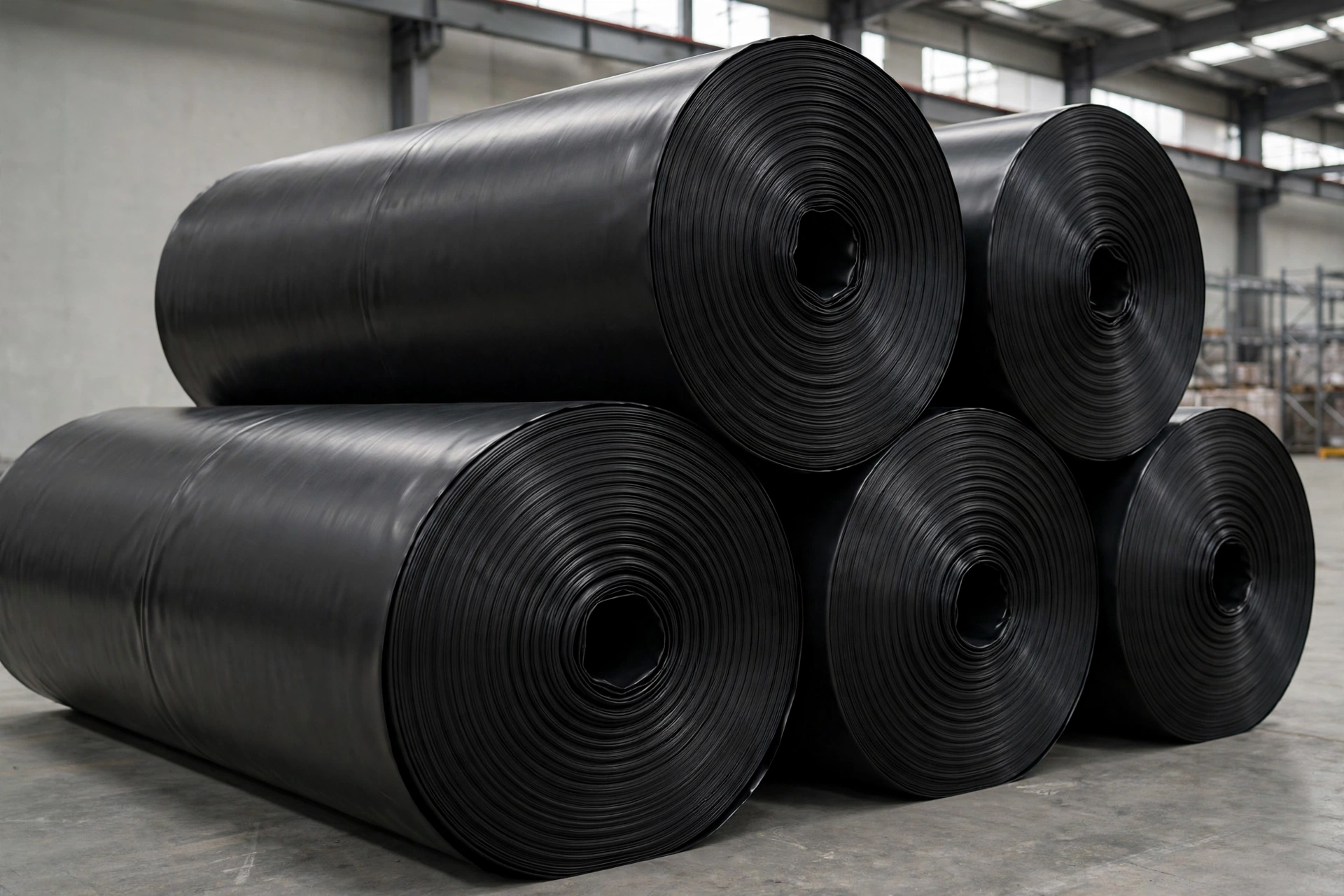
HDPE Geomembrane Thickness Selection Guide
One of the most common questions we hear: "What thickness of HDPE geomembrane do I need?" The honest answer is that thickness follows the application — the stresses, chemistry and design life of the project. Here's how engineers typically decide.
Quick reference by application
| Application | Common thickness | Notes |
|---|---|---|
| Decorative / aquaculture ponds | 0.5 mm | Economical; usually covered or lightly exposed |
| Irrigation canals | 0.75 – 1.0 mm | Often with soil or concrete cover |
| Reservoirs, water storage | 1.0 – 1.5 mm | Exposed; UV stability matters |
| Landfill bottom liners & caps | 1.5 – 2.0 mm | Puncture resistance critical |
| Heap leach pads | 1.5 – 2.0 mm | Chemical resistance + heavy ore loads |
| Tailings dams | 1.5 – 2.0 mm | Textured for slope stability |
| Hazardous waste | 2.0 – 3.0 mm | Maximum barrier performance |
What drives the decision?
- Puncture and mechanical stress. Thicker membrane resists stones, equipment traffic and differential settlement. Under a protection geotextile, thinner gauges become viable.
- Chemical exposure. Leachate and process solutions attack the polymer over time; extra thickness buys extra service life.
- UV exposure. Exposed liners need adequate carbon black (2–3%) and enough thickness to weather decades of sun.
- Regulation. Many landfill and mining permits specify minimum thicknesses — always check local requirements first.
A note on standards
The most referenced specification for HDPE geomembrane is GRI-GM13, which sets test-property requirements per thickness. Our geomembrane is manufactured to GRI-GM13, and we provide batch test data with every order. Be wary of suppliers who claim "GRI certified" — GRI publishes a test standard, not a product certification.